

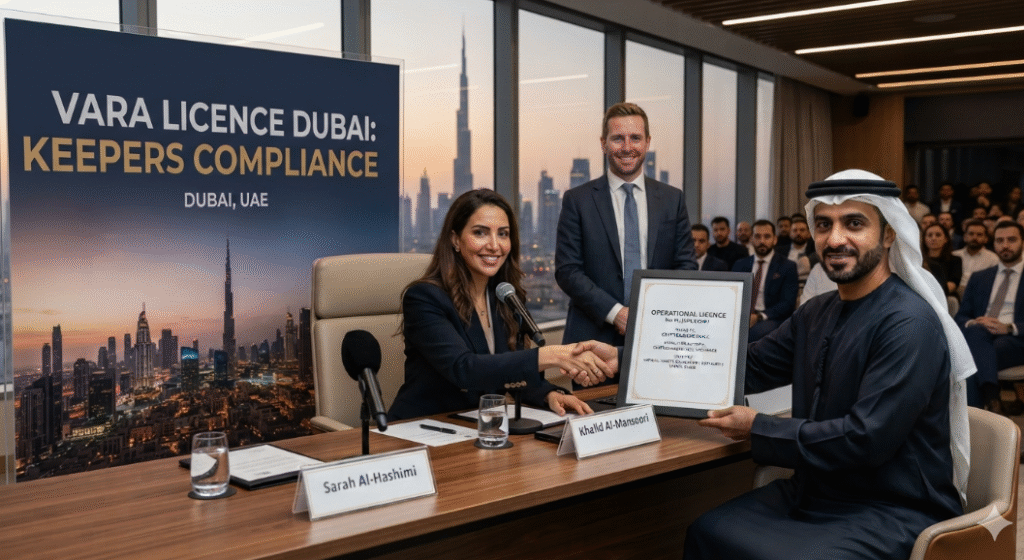
The Complete VARA Licence Dubai Application Roadmap
Dubai has rapidly emerged as one of the world’s leading destinations for virtual asset businesses. With a forward thinking regulatory framework and a strong commitment to innovation, the emirate offers significant opportunities for companies operating in the digital asset ecosystem. At the center of this regulatory landscape is the Virtual Assets Regulatory Authority (VARA), which oversees and regulates virtual asset activities across Dubai.
For businesses looking to enter the market, obtaining a VARA licence is an essential step. Understanding the application process, compliance requirements, and regulatory expectations can help organizations avoid delays and establish a strong foundation for growth. At Keepers Compliance, we help businesses navigate this complex journey with confidence and clarity.
Understanding VARA and Its Role
The Virtual Assets Regulatory Authority was established to regulate, supervise, and govern virtual asset activities within Dubai. VARA’s objective is to create a secure and transparent environment that encourages innovation while protecting investors and maintaining market integrity.
The authority regulates a wide range of virtual asset activities, including advisory services, broker dealer operations, custody services, exchange services, lending and borrowing activities, virtual asset management, and transfer and settlement services.
Any business intending to conduct regulated virtual asset activities in Dubai must obtain the appropriate licence before commencing operations.
Determining Your Business Activity
The first stage of the application roadmap involves identifying the exact nature of your virtual asset business. VARA licensing requirements vary depending on the services a company intends to provide.
A virtual asset exchange will face different regulatory obligations compared to a custody provider or advisory firm. Clearly defining business activities helps establish the correct licensing pathway and ensures that all relevant compliance requirements are addressed from the outset.
This stage also involves assessing operational structures, target markets, service offerings, and risk exposure.
Establishing a Legal Entity
Before applying for a VARA licence, businesses must establish a legal presence in Dubai. This typically involves incorporating a company within an approved jurisdiction.
The chosen corporate structure should align with the proposed business model and future growth plans. During incorporation, organizations must prepare constitutional documents, shareholder information, ownership structures, and governance frameworks.
A properly established legal entity demonstrates organizational legitimacy and provides the foundation for regulatory approval.

Developing a Comprehensive Business Plan
One of the most important components of the VARA application process is the submission of a detailed business plan.
Regulators expect applicants to provide a clear explanation of their business model, operational strategy, revenue projections, target customer base, risk management approach, and compliance framework.
The business plan should demonstrate how the organization intends to operate responsibly while maintaining adequate controls to protect customers and market participants.
Strong documentation at this stage often contributes significantly to a smoother application process.
Building a Robust Compliance Framework
Compliance is a central focus of VARA’s regulatory expectations. Applicants must establish policies and procedures that address anti money laundering requirements, counter terrorist financing obligations, sanctions screening, customer due diligence, and ongoing monitoring.
Businesses must demonstrate their ability to identify, assess, and manage compliance risks effectively.
This includes implementing internal controls, reporting mechanisms, governance structures, and compliance oversight functions that align with regulatory standards.
A well designed compliance program signals regulatory readiness and strengthens the credibility of the application.
Appointing Key Personnel
VARA places significant emphasis on leadership, governance, and management competence.
Applicants are generally required to appoint qualified individuals to key positions, including directors, compliance officers, risk management professionals, and senior executives.
The authority may assess the qualifications, experience, and fitness of individuals responsible for overseeing regulated activities.
Organizations should ensure that key personnel possess relevant expertise in virtual assets, financial services, compliance, and risk management.
Implementing Risk Management Controls
Risk management is another critical component of the licensing process.
Applicants must demonstrate their ability to identify and mitigate operational, financial, cybersecurity, technological, and regulatory risks.
Comprehensive risk assessments should be conducted to evaluate potential threats and establish appropriate mitigation measures.
Documented risk management frameworks help regulators understand how a business intends to maintain stability and protect stakeholders in a rapidly evolving digital asset environment.
Preparing Technology and Security Infrastructure
Virtual asset businesses rely heavily on technology infrastructure. VARA expects applicants to maintain secure systems that protect customer assets and sensitive information.
This includes cybersecurity controls, access management procedures, incident response protocols, disaster recovery plans, and data protection measures.
Organizations must demonstrate that their technology environment is capable of supporting regulated activities while minimizing operational vulnerabilities.
Strong security practices are increasingly important as regulators focus on resilience and consumer protection.
Submitting the VARA Licence Application
Once all preparatory steps have been completed, the formal licence application can be submitted.
The application typically includes corporate documentation, ownership details, business plans, compliance manuals, risk management policies, financial information, governance structures, and supporting evidence demonstrating operational readiness.
Regulators may request additional information or clarification during the review process. Maintaining accurate and organized documentation can help reduce delays and improve overall efficiency.
Regulatory Review and Assessment
After submission, VARA conducts a comprehensive review of the application.
This assessment examines the applicant’s business model, governance arrangements, compliance controls, financial stability, operational capabilities, and overall suitability to conduct regulated activities.
The review process may involve meetings, interviews, document requests, and regulatory discussions.
Organizations should be prepared to respond promptly to inquiries and provide supporting materials when requested.
Operational Readiness Verification
Before final approval, regulators may assess whether the business is fully prepared to operate in accordance with applicable regulations.
This stage may involve evaluating systems, procedures, staffing arrangements, reporting capabilities, and internal controls.
Demonstrating operational readiness is essential because it confirms that the organization can effectively manage its regulatory obligations from day one.
Businesses that invest sufficient time in preparation often experience a more efficient licensing journey.
Receiving the VARA Licence
Upon successful completion of the regulatory review and approval process, the company may receive its VARA licence and begin conducting authorized virtual asset activities.
Obtaining the licence represents a significant milestone, but regulatory responsibilities continue after approval.
Licensed entities must maintain ongoing compliance, submit required reports, monitor risks, update policies, and cooperate with regulatory oversight activities.
A proactive approach to compliance helps businesses maintain their regulatory standing and support long term growth.
Common Challenges During the Application Process
Many organizations underestimate the complexity of regulatory expectations. Incomplete documentation, insufficient compliance frameworks, weak governance structures, and inadequate risk management procedures can lead to delays.
Another common challenge involves aligning business objectives with regulatory requirements. Companies that engage compliance professionals early in the process are often better positioned to address potential issues before submission.
Careful planning, thorough preparation, and regulatory expertise can significantly improve the likelihood of a successful outcome.
Why Professional Compliance Support Matters
The VARA licensing process requires extensive documentation, regulatory understanding, and operational preparation. Navigating these requirements without experienced guidance can be time consuming and resource intensive.
At Keepers Compliance, we work closely with businesses to develop tailored compliance frameworks, prepare licensing documentation, strengthen governance structures, and address regulatory expectations throughout the application journey.
Our goal is to help organizations establish a strong regulatory foundation while minimizing unnecessary delays and compliance risks.
Dubai continues to attract virtual asset businesses seeking a well regulated and innovation friendly environment. Securing a VARA licence is a crucial step for organizations looking to operate legally and build trust within the market.
From defining business activities and establishing a legal entity to implementing compliance controls and demonstrating operational readiness, every stage of the application roadmap plays an important role in achieving approval. With proper planning and expert guidance, businesses can navigate the process more efficiently and position themselves for long term success.
Keepers Compliance supports organizations throughout every phase of the licensing journey, helping them meet regulatory requirements and build sustainable operations within Dubai’s evolving virtual asset ecosystem.